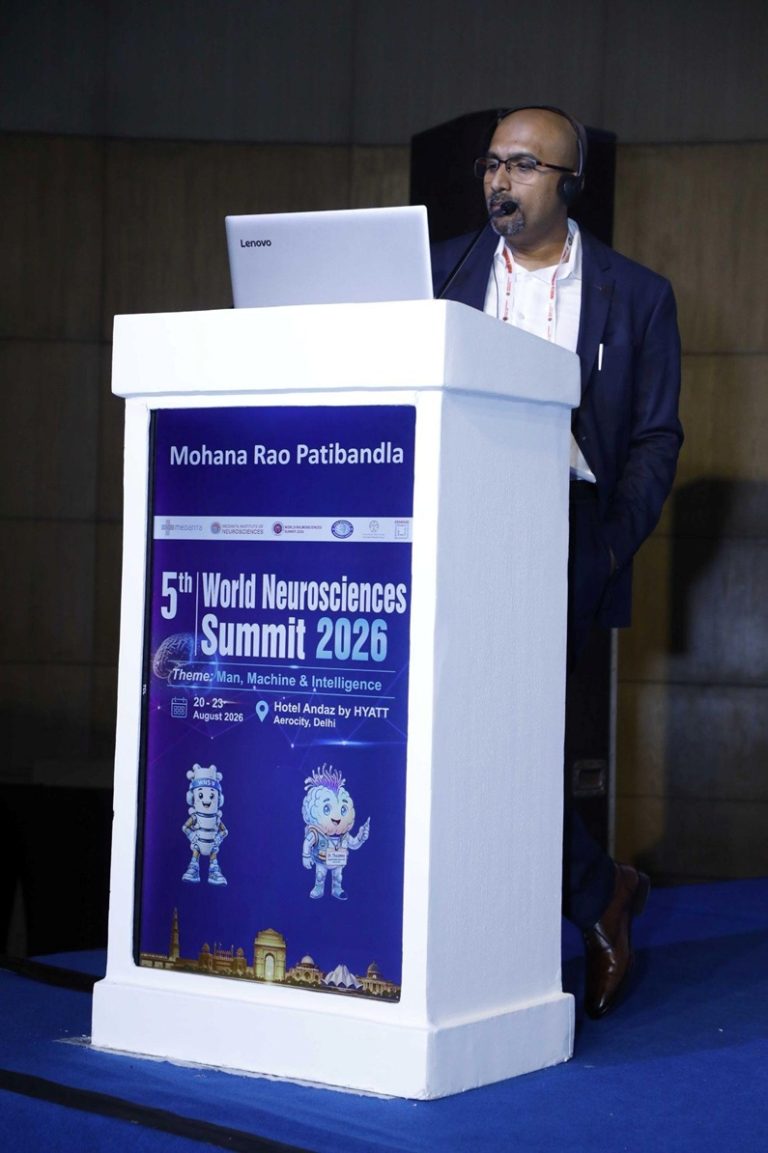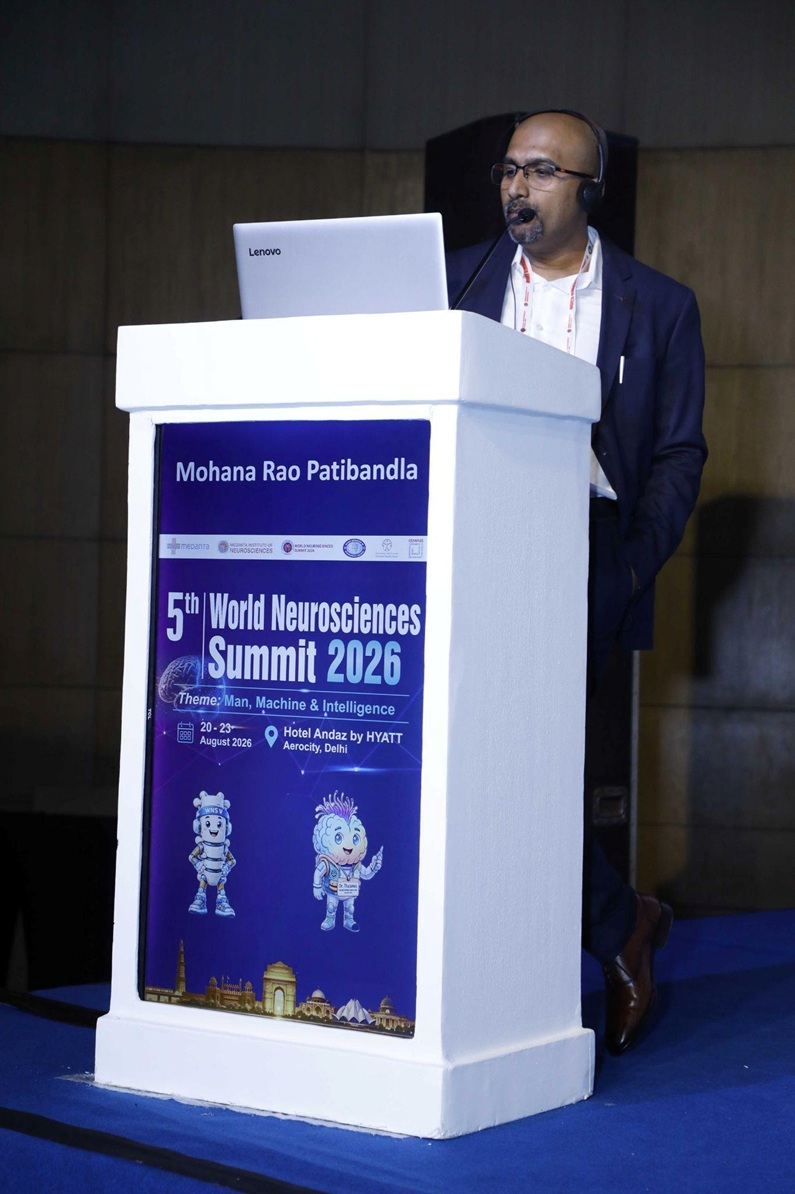
Article by Dr. Mohana Rao Patibandla.
When someone hears the words brain tumour, stroke, epilepsy, or spinal cord injury, life changes in an instant. For many families in India, the next challenge is not only the diagnosis—it is finding specialised care. Too often, patients from Tier-2 and Tier-3 cities believe they must travel to Hyderabad, Chennai, Bengaluru, Delhi or Mumbai for advanced neurosurgery.
I have always believed that this should not be the reality.
My journey as a neurosurgeon has been guided by one simple purpose: to bring healing home by making world-class brain, spine and nerve care available closer to where patients live. That vision continues to shape every decision we make in clinical care, technology, research and education.
Why Access Matters as Much as Expertise
India has some of the finest neurosurgical expertise in the world. The challenge is that this expertise is often concentrated in metropolitan centres, creating significant barriers for patients from regional cities.
Families frequently travel hundreds of kilometres for consultations, surgery and rehabilitation. This journey often means delayed diagnosis, financial stress, disruption of family life and loss of valuable treatment time.
Healthcare should reduce these burdens—not create them.
A patient should have access to advanced neurological care because of their medical need, not because of where they live.
Building a Comprehensive Neuroscience Ecosystem
When I returned to Guntur after advanced training in India and the United States, my goal was not simply to establish another hospital. The vision was to build a comprehensive neuroscience ecosystem where patients receive specialised care from diagnosis through rehabilitation under one roof.
Neurological diseases are rarely managed by a single doctor or a single procedure. Every patient benefits from coordinated care involving neurologists, neurosurgeons, neuroradiologists, neuro-anesthesiologists, neurophysiologists, neurocritical care specialists, rehabilitation physicians, physiotherapists and speech therapists.
This multidisciplinary approach allows treatment decisions to be tailored to each patient’s condition rather than following a one-size-fits-all model.
Neurosurgery Has Entered the Era of Precision
Modern neurosurgery has evolved far beyond traditional open surgery. Today’s objective is not only to treat disease but also to preserve normal brain and spinal function whenever possible.
Advances in technology have transformed how we plan and perform surgery, including:
- Minimally invasive neurosurgery.
- Endoscopic neurosurgery.
- Complex spine surgery using tissue-preserving approaches.
- Epilepsy surgery for carefully selected patients with drug-resistant epilepsy.
- Cerebrovascular and endovascular neurosurgery for aneurysms, stroke and vascular malformations.
- Skull base surgery for complex brain tumours.
- Functional neurosurgery and stereotactic radiosurgery for selected neurological disorders and brain lesions.
The common principle across these specialties is precision—choosing the safest surgical corridor while preserving healthy tissue and neurological function.
Every Patient Deserves an Individualised Surgical Plan
One of the biggest misconceptions is that minimally invasive surgery is always the best surgery.
It is not.
The best operation is the one that is safest and most appropriate for that particular patient. Some patients benefit from minimally invasive or endoscopic approaches, while others require conventional microsurgery because of the location, size or nature of the disease.
The responsibility of a neurosurgeon is not to fit patients into a technique. It is to select the technique that best fits the patient.
That decision comes from anatomy, imaging, clinical evaluation, scientific evidence and experience—not from trends.
Innovation Must Translate Into Better Patient Care
Innovation in medicine should ultimately improve patient outcomes.
Over the past several years, I have had the opportunity to present surgical innovations and clinical experience at national and international scientific meetings. These presentations have included topics in epilepsy surgery, neurotrauma reconstruction, minimally invasive cranial surgery, white matter-sparing Cylinder Surgery for deep-seated brain lesions, cerebrovascular surgery and complex spine surgery.
Scientific conferences are important because they create opportunities for surgeons to exchange ideas, question existing practices and refine techniques based on evolving evidence.
Learning should never stop after training ends. Every conference, every research discussion and every surgical experience contributes to becoming a better surgeon for the next patient.
Looking Beyond Survival
Many neurological conditions require urgent intervention to save life or prevent permanent disability. But modern neuroscience increasingly asks another question:
How well does the patient recover?
Recovery includes speech, movement, cognition, independence, education, employment and quality of life.
Whether treating a child with epilepsy, a young adult with traumatic brain injury, a patient with a deep-seated brain tumour or an elderly person recovering from stroke, preserving neurological function is as important as treating the disease itself.
This philosophy influences every stage of care—from pre-operative planning to rehabilitation.
Education Is Part of Patient Care
I believe that educating patients and families is an essential part of medicine.
An informed patient is better prepared to participate in treatment decisions, recognise warning signs and understand recovery expectations.
This is one reason I regularly write educational articles, participate in scientific discussions and speak at academic conferences. Sharing knowledge should not remain limited to medical classrooms; it should also empower patients and caregivers.
When families understand their condition, fear often gives way to confidence and informed decision-making.
The Future of Neuroscience in India
The future of neurosurgery will be driven by precision medicine, artificial intelligence, advanced imaging, robotics, endoscopic surgery, stereotactic radiosurgery, minimally invasive spine surgery and personalized neurological care.
But technology alone will not define the future.
The real transformation will come when these advances become accessible beyond India’s largest cities.
My hope is to see more centres of excellence emerge in Tier-2 and Tier-3 cities, more young neurosurgeons trained in subspecialties, stronger research collaborations, and greater access to advanced neuroscience care across India.
That is how healthcare becomes equitable.
Bringing Healing Home
Every patient deserves timely diagnosis, compassionate communication, evidence-based treatment and long-term support close to home whenever possible.
For me, neurosurgery has never been only about performing complex operations. It is about building systems that make advanced care accessible, creating trust through ethical practice, and continuously learning so that patients benefit from the latest scientific advances.
Bringing healing home is not a slogan—it is a commitment to ensuring that world-class brain, spine and nerve care reaches patients where they need it most.
About Dr. Mohana Rao Patibandla
Dr. Mohana Rao Patibandla is a neurosurgeon and founder of Dr. Rao’s Hospital – International Institute of Neurosciences (IIN) in Guntur, Andhra Pradesh. He has advanced fellowship and international training in epilepsy surgery, pediatric neurosurgery, minimally invasive and endoscopic neurosurgery, complex spine surgery, skull base surgery, neuro-oncology, cerebrovascular and endovascular neurosurgery, and functional neurosurgery including stereotactic radiosurgery. Dr. Rao has received the Brainlab Neurosurgery Award from the Congress of Neurological Surgeons (CNS) and the Gold Medal at PASMISS–MISSABCON–COSS 2026 for his academic contributions to minimally invasive neurosurgery and spine surgery. His clinical practice focuses on complex brain, spine, pediatric, epilepsy, cerebrovascular, skull base, endoscopic and minimally invasive neurosurgery, and stereotactic radiosurgery. He regularly serves as invited faculty at national and international scientific conferences, where he presents innovations in neurosurgery, neurotrauma, epilepsy surgery, cerebrovascular surgery, and minimally invasive cranial and spine surgery.
About the Author